Shabir Hussain
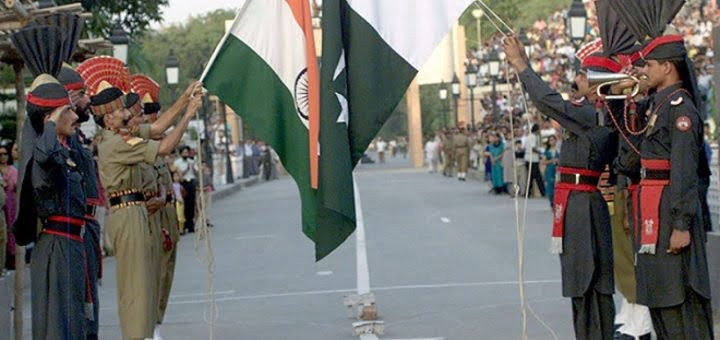
In a rare joint press release on February 24, the Director Generals of Military Operations (DGMO’s) of India and Pakistan said that the two sides had agreed to observe a ceasefire along the Line of Control (LoC). The two armies exchanged heavy artillery fire in recent months that led to casualties on both sides.
“Both sides agreed for strict observance of all agreements, understandings and cease firing along the Line of Control and all other sectors with effect from midnight of February 24/25,” said the joint statement.
The abrupt ceasefire statement came two weeks after People’s Liberation Army of China (PLA) and the Indian Army began disengagement in eastern Ladakh after many months of eyeball to eyeball buildup that turned bloody at least once when the two armies confronted each other with clubs and rocks in Galwan Valley which led to the death of twenty Indian soldiers including a colonel. Ten Indian soldiers, later released, were taken into custody by the PLA. Indian media claimed heavy casualties on the Chinese side as well.
The massive power gap between India and China is unbridgeable till foreseeable future. So, at the very outset, the LAC flare-up was a battle of unequals.
According to the US-based company Recorded Future that studies the use of internet by state actors, in October 2020, malware began to flow into the Indian electric grid which resulted in a blackout in India’s commercial capital, Mumbai. This is being seen as a warning from China that a similar power outage could be created across country that could lead to a major crisis if India didn’t behave itself.
In the latter part of 2020, India was keen on watering down its rhetoric and send out reconciliatory signals to China. Highly placed sources revealed that the Trump administration warned India not to show any signs of rapprochement. It threatened that it would endorse the reports – and release satellite maps – that revealed China was in control of territories that were earlier patrolled by the Indian Army.
But with Biden coming into office and showing no signs of aggression towards China, it was easier for India to seek disengagement along LAC. “I’m not going to do it the way Trump did. We’re going to focus on international rules of the road,” Biden said in a CBS interview while talking about US’ engagement with China. He said that “we need not have a conflict.”
Media, think tankers and observers in India generally find it hard to wrap their heads around Sino-Pak interoperability. You can’t be friends with China and hostile to Pakistan at the same time. That’s how the regional geostrategic equation has panned out over the last decade or so. But if the LAC disengagement and the LoC ceasefire are an indication that India has started waking up to the reality, it must be seen as a welcome development.
Also, China is keener than ever on Kashmir after India struck down Articles 370 and 35-A and downgraded the state of J&K to two union territories on August 5, 2019.
Within days of the revocation of Articles 370 and 35A of the Indian Constitution, Chinese government’s media organ Global Times wrote in an editorial: “Reckless India’s unilateral decision on Kashmir is a geo-political trickery that may have actual consequences that India can’t control.” A few months later LAC happened. Those who know China know that its territorial claims are sacrosanct to it and not just a bargaining chip.
According to sources, in one of the initial meetings during the LAC standoff between the commanders of the two sides, PLA made it clear that China wasn’t at all amused by India’s August 5 move.
So intertwined are China’s interests with Pakistan that it can’t afford to allow India an upper hand over its ‘iron brother’, which in its own right isn’t a walkover either as many in India want to believe. Despite its myriad problems, Pakistan remains a massive military might that doesn’t hesitate in flexing its muscle as and when needed. A glimpse of which was on display on Feb 27, 2019 when PAF outsmarted and outgunned IAF in a spectacular dogfight in response to Balakot strike.
While the ceasefire is no guarantee that peace will prevail, it could be a great opportunity to open a serious, sustained dialogue.
There are speculations that the two countries might upgrade diplomatic ties and bring back high commissioners in New Delhi and Islamabad. It’s said that India wants Pakistan to take the initiative since it was the latter that downgraded diplomatic ties in response to what happened on August 5, 2019. If Pakistan agrees to it, it might have to face a lot of opposition at home and from Kashmir’s resistance leadership, more so if the Indian media projects it as Pakistan’s surrender on Kashmir. Senior Kashmiri leader Syed Ali Shah Geelani has already shot a strong letter of disapproval after the LoC ceasefire. Pakistani leadership, including Prime Minister Imran Khan, had to give strong assurances that there was no compromise on Kashmir. So it’s unlikely that any CBM between the two sides is going to succeed without bringing Kashmir to the table. Unless the Kashmir issue is addressed, peace will remain elusive. Not just between India and Pakistan, but between India and China as well.