

By: Javeed Ahmad Bhat
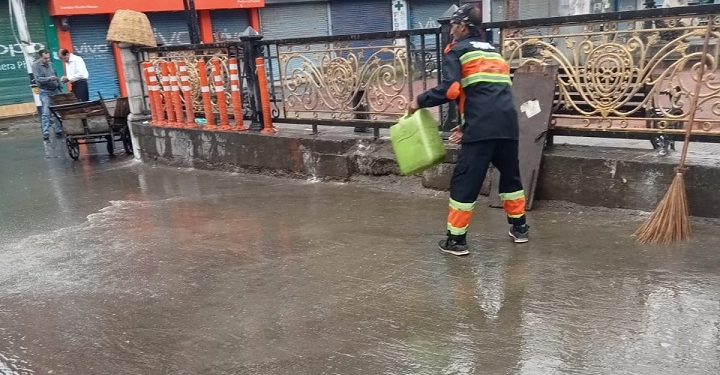
Sudra, now known as Untouchables or Dalits, were assigned to serve the caste groups above them in the service sector that is considered impure. For this, Dalits worked in roles such as scavengers, cleaners, sweepers, leatherworkers, tailors, goldsmiths, black- smiths, and fishermen.
Dalits have after due government care and attention Dalits have played a prominent role in shaping the economic and social, political face of the country.
Much headway in the Jammu and Kashmir was not possible for the progress of Dalits due to article 370 as its provisions had caused them to lurk in pessimistic corridors in terms of development.
The provisions of Article 370 were punishing for the dalit community to say the least with them being left out in all walks of Life in Jammu and Kashmir development arena.
Expert pulse has been
The situation of the Scheduled Castes (SCs) and Scheduled Tribes (STs) in J&K was worrisome under Article 370. The SCs and STs were not getting benefit of the provision of reservation given by the Constitution of India for their economic and educational uplift.
In such a situation, it can be understood that in 1950, what Pandit Nehru and Sheikh Abdullah must have been thinking for the SCs and the STs of the State and that is why the uplift and empowerment of the class was never thought in J&K Assembly.
Valmiki Dalits of Jammu region were more feeling the heat of article 370.
For the oppressed Valmiki Dalits in Jammu and Kashmir, the abrogation of Article 370 has brought freedom and domicile status. For the first time in three generations, they became eligible for government.
Such was injustice against Dalits in Jammu and Kashmir that Most Valmikis, brought to J&K from Punjab in 1957 to clean streets, were restricted to odd jobs including sanitation. They were not provided Permanent Resident Certificate despite “political assurances” amid special status.
All of us know that Explain that the condition of Hindu Dalits cleaning the drainage and urination is in Pakistan today, the same condition was in Jammu and Kashmir of India before the abolition of Article 370. During this time, no leader of any party raised any voice nor helped them in any way, but as soon as Article 370 was removed from Jammu and Kashmir and included in the mainstream, they were given their right. Surely came to register his protest. Many parties tried to bring it to their senses by splattering the politics of protest over their dead political existence.
The abrogation of article 370 has certainly been a boon for the dalit community.
Importantly, The abrogation of Article 370 would pave the way for the people of Jammu and Kashmir, so far leading lives of second class citizens, to join the mainstream of the nation, BJP working president J P Nadda had stated this after the abrogation of article 370.
He has observed that
It is not only a joyous moment for the people of India, but also for those in Jammu and Kashmir because they were leading the lives of second class citizens.
Now they can join the mainstream of the nation,” he said addressing a gathering on the topic “One nation, one constitution at the Palace Grounds.
The dalits would get their due land rights to jobs by virtue of the abrogation of article 370 and all the basic facilties to live a dignified life . The dalit community was deprived of the benefits of the historic schemes which they were previously deprived ranging from health to education needs.
Hope on ground is that the position of people especially the dalit community would move towards brighter era after the abrogation of 370 article.

Dalits getting dream world after 370 abrogation in JK
ADVERTISEMENT
ADVERTISEMENT
ADVERTISEMENT

Leave a Reply

Kashmir Media Watch (launched on 12 March, 2010), a pioneer among news portals in J&K, owes its origin to the idea that an unbiased, impartial and objective reporting on Kashmir is posted out to readers worldwide who want to remain updated on what is happening in Kashmir.
Contact us: kashmirmediawatch2010@gmail.com